
You’re Being Lied to About Israel and Hezbollah
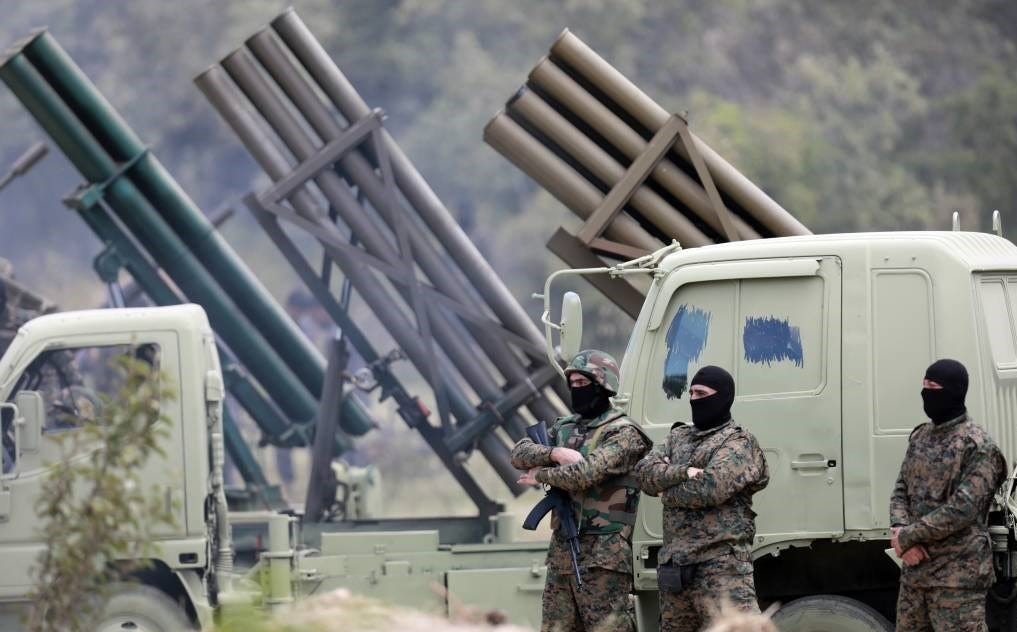
If you’ve been following the news this week, you’ve probably seen some version of the same headline: Hezbollah “joins the war,” Hezbollah “fires on Tel Aviv,” or some variation of a headline that puts the weight of action solely at the feet of Hezbollah, while admonishing Israeli action. This narrative is consistent, but particularly consistent in how incorrect the sentiment is.
On March 2, 2026, Hezbollah launched rockets and drones at Israel for the first time since November 2024, citing retaliation for the Israeli assassination of Iran’s Supreme Leader Ali Khamenei. Within hours, Israel bombed Beirut, killing at least 52 people and issued evacuation orders to more than 50 towns, and has since launched a land invasion and a demand that Lebanese citizens evacuate the territory at the other end of their invasion.

It’s clear that most English-speaking outlets want you to believe this is Hezbollah suddenly attacking Israel out of the blue. It wasn’t. The same outlets have ignored thousands of Israeli ceasefire violations that remained un-responded to for 16 months by both the Lebanese army and Hezbollah. One doesn’t need to support the group to point to the clear double standards at play here.
Is the ceasefire in the room with us now?
The ceasefire between Israel and Hezbollah was signed on November 27, 2024. Under its terms, Israel was to withdraw from southern Lebanon within 60 days, a move that was never completed entirely, while Hezbollah was to pull its forces north of the Litani River, which they did, however Israel claims that the group still hold a secret presence in the area. A five-country monitoring panel, led by the United States, would oversee compliance, however, never seriously compelled Israel to comply with their end of the agreement.
Here is what actually happened.
Israel began violating the agreement almost immediately. The day after the ceasefire took effect, the IDF shot at journalists and civilians in the town of Khiam and used drones in the area, killing several people according to Israeli media’s own reporting. Within a week, Lebanon had accused Israel of airstrikes, shelling, tank fire, home demolitions, and military advances into areas it hadn’t previously occupied.
By December 2, 2024, five days in, Franch diplomats reported 52 Israeli violations. By the end of the first 60 days, UN experts documented at least 57 civilians killed and 260 properties destroyed.
It only escalated from there, eventually seeing multiple large scale attacks in a day became a norm in the “ceasefire”, while no response from Lebanon or Hezbollah would come.
The numbers no one is quoting on air
The United Nations Interim Force in Lebanon (UNIFIL) has documented more than 7,500 Israeli airspace violations and nearly 2,500 ground violations since the ceasefire began. Lebanon told the UN Security Council that between November 2025 and January 2026 alone, Israel committed 6,256 violations of Lebanese sovereignty, 1,542 on land, 3,911 in the air, and 803 at sea.
By November 2025, one year into the so-called “ceasefire,” the Lebanese health ministry and the United Nations reported that more than 330 people had been killed and roughly 945 injured by Israeli forces. Among the dead: at least 127 confirmed civilians, including 13 children. In a single strike on the Ain al-Hilweh Palestinian refugee camp in November 2025, Israeli forces killed 13 people, eight of them children, the deadliest attack since the ceasefire was signed.
Israel also fired on UN peacekeepers on multiple occasions. In October 2025, an Israeli drone dropped a grenade near a UNIFIL patrol. In November, a Merkava tank fired shells that landed meters from peacekeepers.
And during this entire period, more than 15 months, the UN documented just four incidents of projectiles fired from Lebanon toward Israel. None caused casualties, and none were claimed by Hezbollah or the Lebanese army, likely being fired by militias in the region.
Read those numbers again, at least 6,256 confirmed ceasefire violations, and 4 possible violations. Now, ask yourself why the story of Hezbollah joining the war starts on March 2 2026.
The withdrawal that never happened
Israel was supposed to leave southern Lebanon by January 26, 2025. It didn’t. The deadline was extended to February 18. It still didn’t leave. As of this week, Israel continues to occupy positions inside Lebanese territory and has now launched a fresh invasion deeper into the country. During the “ceasefire” it has blocked the reconstruction of border villages it leveled during the 2024 war, preventing tens of thousands of displaced people from going home.

More than 64,000 Lebanese remain internally displaced, a number that is likely to grow following the Israeli demand for Lebanese citizens to evacuate the South of the country. Israel has targeted construction equipment, in one attack, destroying roughly 300 heavy-duty machines being used for rebuilding. It has demolished homes, struck agricultural land, and rendered schools, health centers, and places of worship inaccessible.
The UN Special Rapporteur on extrajudicial killings called the pattern “war crimes and a violation of the UN Charter.” Multiple UN expert panels have called for independent investigations. Israel has not responded to any of them.
Hezbollah finally responds
Hezbollah launched rockets at Israel for the first time since the ceasefire began, that is a fact based on all available evidence. It is also a fact that Hezbollah did so in the context of the broader U.S.-Israeli strikes on Iran that killed Khamenei, and after 15 months of sustained Israeli military operations inside Lebanon, with thousands of ceasefire violations, hundreds killed and tens of thousands of people displaced.
You can disagree with Hezbollah’s decision to fire. You can believe it was reckless, that it endangers Lebanese civilians, that it plays into Israel’s hands. These are legitimate opinions, but as soon as you delve into the idea that Hezbollah broke the ceasefire, or joined a war unjustly, you delve into the area of myths and legends.
You cannot honestly frame March 2 as the moment the ceasefire broke, or the moment hostilities between Israel and Lebanon or Hezbollah commenced. The ceasefire was broken thousands of times before Hezbollah ever fired a shot.
Why you’re being lied to?
You’re being lied to because framing determines policy and opinion. When the story begins with Hezbollah’s attack, Israel’s response, airstrikes on Beirut that killed 52 people in a single night, evacuation orders for entire regions, troops crossing the border, looks like self-defence and not an invasion that was likely planned before March 2. When the story includes the preceding 15 months, it looks like the continuation of a military campaign that Israel never stopped taking part in.
U.S. officials told Lebanese media this week that they now consider the ceasefire “over” and will not intervene to stop Israeli attacks. They demanded that Lebanon designate Hezbollah as a terrorist organization, warning that otherwise “there will be no distinction between the two.” That framing, collapsing a country of millions into a single armed faction, has consequences, and it has had consequences before.
The people fleeing southern Lebanon right now, loading their cars in scenes that echo the worst days of September 2024, are not Hezbollah. They are families. They are the same people who were told a ceasefire would protect them, who tried to go home, and who were shot at when they got too close to their own houses.
The people of Lebanon deserve a story that starts before March 2, the people of Lebanon deserve a media that is willing to speak the truth.


