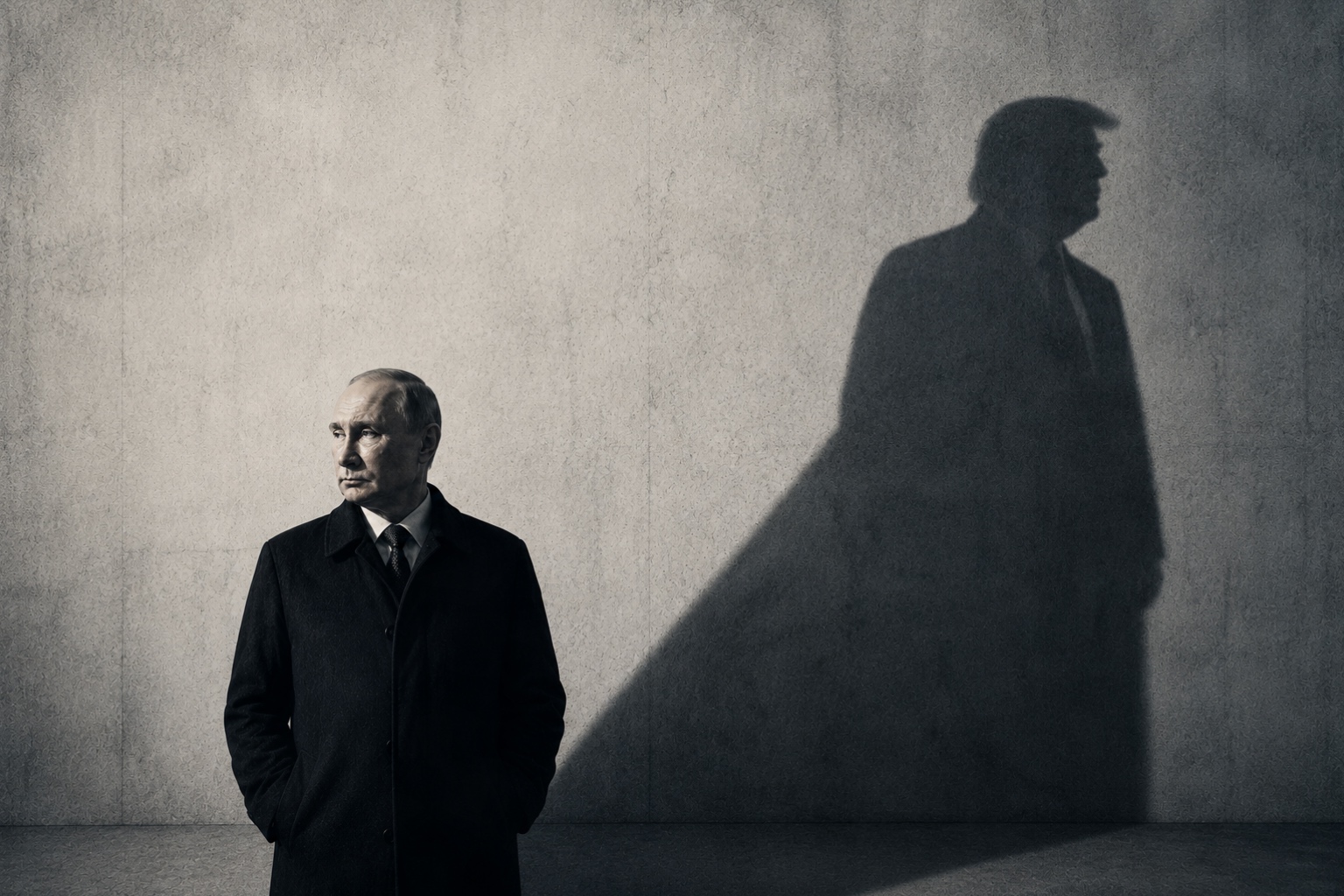
Trump's War on Comedy Mirrors the Start of Putin's Dictatorship
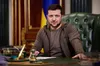
On the night of Thursday 21 May, Stephen Colbert walked out onto the stage of the Ed Sullivan Theater for the last time. After 33 years, The Late Show is finished. He did not dwell on why his show was being taken off the air, mentioning the situation with CBS and Paramount sparingly. He thanked CBS, told a booing audience they had been lucky, and left. By the next morning, Donald Trump had made it clear that he wanted the removal of the comedian and his TV show. While he had already publicly attacked Colbert, that morning, Trump had posted to Truth Social: “Amazing he lasted so long!” The post came in a flurry of bizarre AI posts from the U.S. President, one of which showed the man in orange grab the late night TV host and throw him into a dumpster.
The comedian declined to make himself the story, essentially offering an unsaid “out” to the authoritarian move by Donald Trump. The head of state could not stop himself from gloating over the success of his silencing campaign. Donald Trump has attacked the media and comedians, in a way that seems all too familiar, as we have seen this before. Not in America, but in Vladimir Putin’s Russia.

A warning from Russia
Andrei Soldatov is a Russian investigative journalist who watched Vladimir Putin consolidate power in the early 2000s. He wrote in the Atlantic that what is happening now should send chills down the spine of anyone who worked in Moscow back then. That, he said, was exactly how Putin began, by going after mainstream media, starting with television, and notably with the TV comedians.
He noticed something else, the language repeatedly attributed the cancellations to the comedians somehow losing audience, whether true or not. Boring, low ratings, the idea that comedians had lost their edge, both authoritarian leaders used similar language in these attacks. Soldatov heard all of it during the 2001 assault on NTV, Russia’s last major independent broadcaster, and he is hearing it again now in the justifications for removing Colbert and Jimmy Kimmel.

Roman Dobrokhotov, another Russian journalist now in exile, put it more bluntly after Kimmel’s suspension: if Americans lose free speech the way Russians did, they will end up where Russians are now. David Remnick, editor of The New Yorker, made the same observation, when Putin came to power, the first people he silenced were the comedians.
This is not a loose analogy reached for in anger. It is a diagnosis offered by the people best placed to recognise the disease. And once you accept the diagnosis, the rest of the picture stops looking like a series of unrelated controversies and starts looking like what it is: a method.
The Putin mechanism
We are seeing Trump implement the same Putin mechanism, learning from a man his political moves seem to endlessly benefit, whether intentionally or not. The state does not need to send police to a newsroom. It applies pressure through the levers it already controls, be they regulators, prosecutors, the approval of corporate mergers, and it relies on the companies that own the media to fold rather than fight. Putin used Gazprom and the courts. The Trump regime uses the Federal Communications Commission and the federal approval that media giants need to do business. The equation they both used is that the TV networks themselves will back down as soon as they are confronted by the state itself, and so far, the equation is correct.
Take how it worked with Colbert. Paramount, the company behind CBS, was urgently seeking the Trump regime’s approval of a media merger at the very moment Colbert was given his marching orders last summer. The company called the cancellation “purely a financial decision against a challenging backdrop in late night.” Maybe. But the timing was not subtle, and the skepticism it drew was not paranoia.
In February, Colbert said CBS would not let him air an interview with James Talarico, a Democratic Senate candidate in Texas, out of fear it would violate the Trump administration’s regulatory guidance on giving equal time to political candidates, a rule that has never traditionally applied to talk shows. Nobody at the regulator had to pick up the phone. The threat of how it might react was enough, and the network spiked the interview itself. That is not a chilling effect anymore, that is the mechanism we were warned of by Russian journalists like Roman Dobrokhotov.
The comedians are the canary in the coal mine. They go first not because they are the most dangerous critics, but because they are easier to dismiss outright than journalists. And in Russia, what came after the comedians was the systematic dismantling of independent television, then independent print, then any opposition voice at all. Every major independent outlet in Russia has now been shut down or driven out, with only Putin friendly media remaining.
The Pentagon media overhaul
If late night is where the public can see the squeeze, the Pentagon is where the regime stopped pretending. The Trump friendly media already control the narrative from the Pentagon.
Last autumn, Defense Secretary Pete Hegseth told news organisations they could no longer cover the department unless they agreed, in writing, to report only information the administration had authorised for release, including unclassified information. Refuse, and reporters would lose their access and surrender their press badges. Media lawyers warned the rules could criminalise routine journalism, the ordinary business of talking to sources inside the building.
The U.S. press did not fold to the demands, but it didn’t matter. Practically every major news organisation refused to sign, including Fox News, Hegseth’s own former employer, handing in their credentials en masse rather than agree to be censored. It was the right call, but unfortunately, it played out in the exact manner that suits a regime like Trump’s. The correspondents walked, the “Correspondents’ Corridor” emptied, and the regime did not mourn the loss. Instead, it filled the seats they had forced the old journalists out of. Hegseth’s press operation rolled out the welcome mat for MAGA media influencers to take the chairs the real reporters had vacated. A principled refusal met a regime that was happy to be refused, because the empty room was the goal.
A federal judge had already ruled the original credentialing policy unconstitutional in March, a First Amendment violation. When the regime responded by closing the corridor and forcing reporters to move through the building under escort, the same judge ruled again in April that this was an illegal end-run around his own order, that the Pentagon could not reinstate an unlawful policy under a new name and expect the court to look away. The regime said it disagreed, and appealed. Lose in court, comply in form, restrict in substance, replace the independent press with loyalists. If you have read anything about how Putin handled NTV, that sequence will feel familiar, because it is the same one.
The administration banned The Associated Press from covering the president because the AP would not adopt Trump’s preferred name for the Gulf of Mexico. A federal judge ruled the ban a violation of the AP’s free speech: if the government opens its doors to some journalists, it cannot shut them to others over their viewpoint. The Constitution, the judge wrote, requires no less.
Rather than restore the AP, the White House restricted access for all the wire services, the AP, Reuters and Bloomberg alike, the agencies whose fast, factual reporting reaches billions of people through thousands of outlets worldwide. Press secretary Karoline Leavitt took personal control of the press pool, ending decades of deference to the White House Correspondents’ Association, and the White House kept for itself the “day-to-day discretion” to decide who gets into the room with the president at all.
The logic is identical to the Pentagon’s. A court says you cannot exclude the press because of its viewpoint, so you exclude the press through a process you control instead, and you keep the final say over who is allowed to ask the questions. It is censorship laundered through procedure, just like the Putin mechanism was designed to do.
The extreme last steps
Putin’s regime went much further than anything that has happened in the USA so far. Russian comedians and journalists have been imprisoned, exiled, beaten, poisoned, killed. Independent Russian media was not pressured into smaller spaces, it was outright destroyed. The Trump regime has not done this. It has not sent anyone to prison for a joke. At least, not yet.
The parallel with Russia is in the application of the methodology, not the specific elements of the moves. Apply pressure through regulators and the leverage of corporate self-interest. Start with the comedians, because they are the softest target. When the courts say no, obey the letter and gut the substance. Hand the vacated ground to a loyal press that will not ask the hard question. Move outward from entertainment to the agencies, from the agencies to the wires, from the wires to whoever is left.
The men who watched it happen in Russia are not warning us about where the USA is. They are warning us about where this road goes, because they have already walked it to the end, and they have been at this point before.
Colbert is gone. The Correspondents’ Corridor is empty. The journalists have been pushed back from the president’s door. None of it is hidden, the regime is confident enough to dismantle a free press in plain sight, betting that by the time enough people call it what it is, it will be too late to matter. They might just be right.