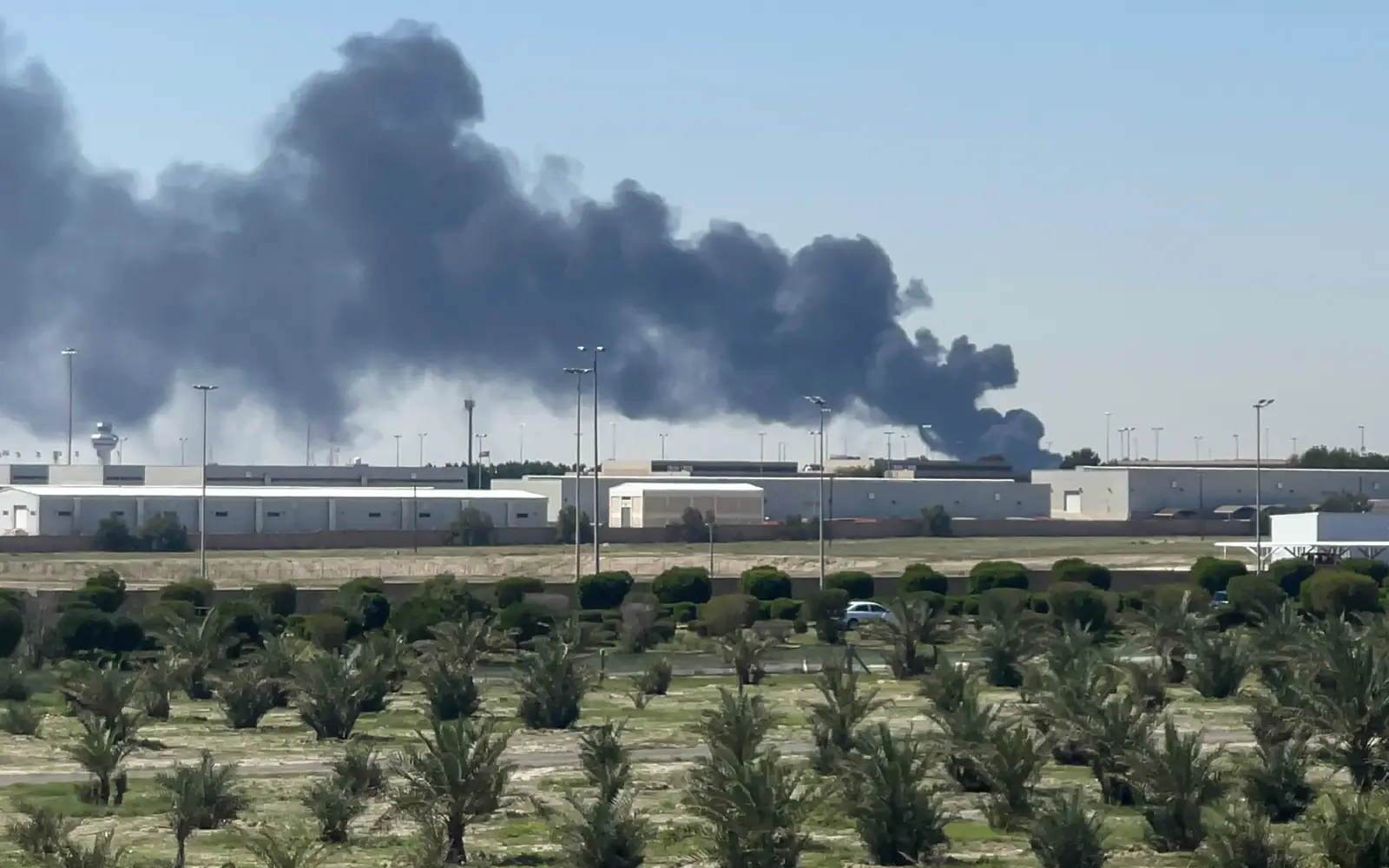
The U.S. military’s Central Command told the world on June 2nd that Iran’s missile and drone strikes had failed entirely. “Iran launched several ballistic missiles toward regional neighbors,” CENTCOM posted to X. “However, all failed to hit their intended targets.” Hours later, Kuwait’s own Defence Ministry confirmed that Iranian drones had struck the passenger terminal at Kuwait International Airport, wounding several people and forcing the suspension of all commercial flights.
So, plain as day, the U.S. military lied, and not the only time that night. Their claim that their attacks were in “self-defence” is countered by the fact that U.S. strikes came hours before an Iranian response.
“All failed to hit their intended targets.” Kuwait International Airport is a regional neighbor’s target. Its Terminal 1 sustained what Kuwaiti officials described as significant material damage. The airport’s radar system, already destroyed in earlier rounds of this conflict, was hit again. Passengers and staff were wounded and taken to hospital. Kuwait Airways suspended all operations. Indian carrier IndiGo halted flights until June 4th. Emirates and other international carriers diverted incoming aircraft to Doha, Riyadh and Dubai.
None of that happened in a country whose infrastructure was successfully defended, as the U.S. military claimed.
The airport had only reopened Terminal 1 to international airlines two days earlier, on June 1st, following months of closures caused by this same conflict. It lasted 48 hours before Iranian drones put it out of service again, while the U.S. military lied about the strike hitting.
The U.S. regime’s track record in this conflict includes a pattern of declaring attacks defeated while fires burn, sirens wail and hospitals fill. On the night of June 2nd alone, explosions were reported in Kuwait, Bahrain and Iraq. Air raid sirens activated across all three countries. Bahrain, Kuwait and the UAE closed their airspaces. None of that is consistent with the claims made, but the strike on Kuwait’s airport shoots a clean hole through the statement entirley.
CENTCOM posted a second statement that night, this one narrower: “All Iranian attacks on American forces failed.” The framing is deliberate. The first statement covered the region. The second covered U.S. forces. Read together, they are designed to let the broader falsehood stand while retreating to a defensible position. But, given that the first statement was entirely false, what are we to think this one.
The USA claimed on February 28, the day they launched their war against Iran, that no U.S. personnel had been hurt in Iran’s retaliation. The truth was very different, three soldiers had been killed and another five injured. On that basis, the claim that no one was injured last night cannot be determined to be true on the strength of the U.S. military’s statement alone.
What the evidence shows is this: Iran launched a coordinated wave of missiles and drones across multiple countries on June 2nd, in direct response to a strike on their territory by the USA. Some were intercepted. Some were not. A civilian airport was struck, damaged and closed. People were hurt. The U.S. military told the world that everything had been stopped, the U.S. military lied, it’s up to you if you want to dismiss precedent and believe their future statements.
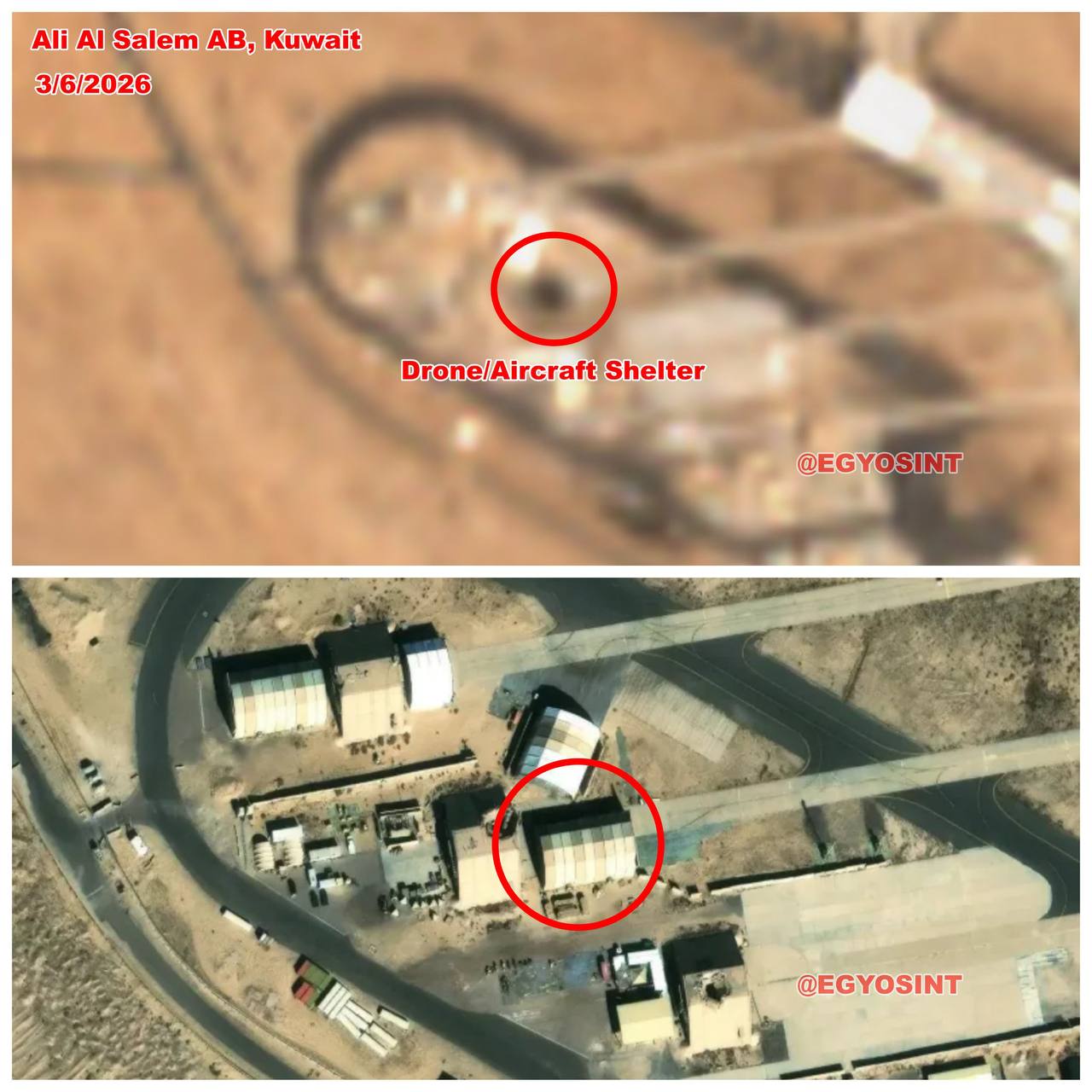
Fresh satellite imagery published by open-source analyst Egypt’s Intel Observer (@EGYOSINT) on June 3rd adds a second confirmed strike from the same attack wave. Imagery geolocated to 29°21’04.72”N, 47°30’14.06”E shows the destruction of a drone and aircraft shelter at Ali Al Salem Air Base in Kuwait, a facility that hosts U.S. military personnel. The before-and-after comparison is unambiguous: the structure is gone.
That matters because CENTCOM issued a second statement that same night, narrower in scope: “All Iranian attacks on American forces failed.” Ali Al Salem is a base where U.S. forces are stationed. A confirmed strike on its infrastructure cannot be squared with that claim, and given that the broader statement was demonstrably false, the narrower one deserves exactly the same scepticism.