

South Carolina Introduces Segregated Toilets for Trans Students
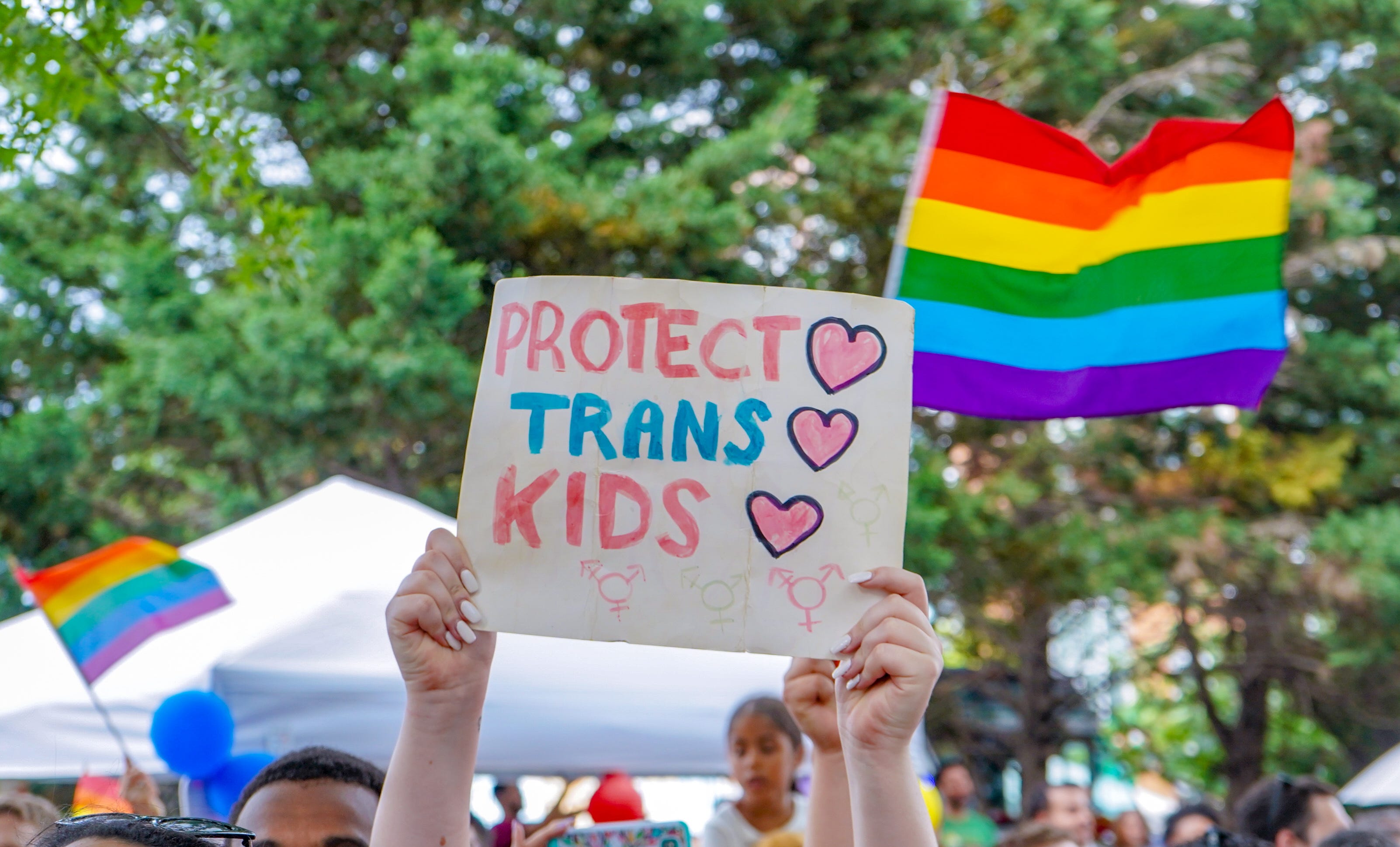
On 15 May, Governor Henry McMaster signed the South Carolina Student Physical Privacy Act into law. A misnomer of a statute, if ever there was one, as the it is privacy that is stolen from those who are targeted by the act. What it does, in plain statutory English, is sort children and university students into bathrooms by the sex a doctor wrote down at the moment of their birth, and for the ones who do not fit that record, it offers an “alternative”. We will let the law describe the alternative in its own words, because the law doesn’t attempt to hide itself.
H.4756 requires every multi-occupancy restroom, locker room, and changing facility in the state’s public schools and universities to be designated for one sex only, defined as “biological sex, either male or female, as observed or clinically verified at birth.” Research
Transgender students may not use the facilities that match their gender. In their place the law offers what it calls an “accommodation,” and lists three options a school may use. One of them, written into the definitions section of the bill itself, is “a single-user portable restroom.” In plain English, that is a porta-potty. The kind you find at a building site or a festival.
Studies repeatedly show that people just don’t have the same appetite for transphobia as has been seen by many in government and in the media. It is important to note this before we continue, as the scapegoating of trans people has become a regular sight for those of us who follow politics, but studies show a majority of people oppose the transphobia. In this reality, we have to highlight that a law that targets the presence of trans people in toilets does not tackle a public need or desire.
This is all too familiar
A district that fails to comply loses a quarter of its state operating funds, withheld until the State Board of Education decides it has fallen back into line. The same penalty hangs over every public college and university, mirroring the situation the USA found itself in the Jim Crow era. In 1956, Virginia's General Assembly passed a package of laws known as Massive Resistance, and the linchpin was a law that cut off state funds and closed any public school that attempted to integrate.
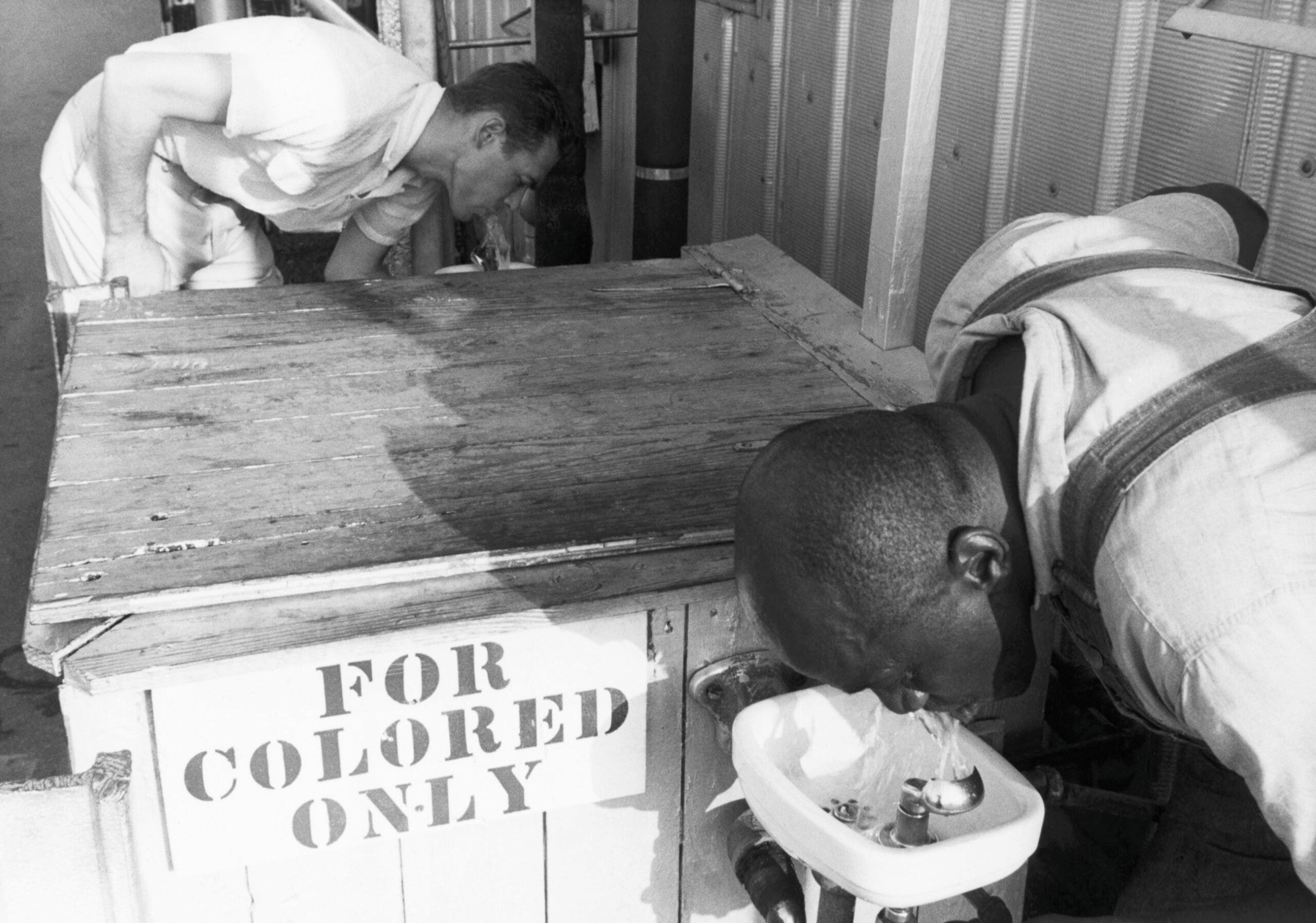
The new law is not guidance, it is not a recommendation, it is a financial gun held to the head of every school board in the state, and the trigger is whether a sixteen-year-old is allowed to pee indoors. This is the same mechanism used under Jim Crow to keep racist parents secure in the knowledge that their kids did not need to share a toilet with a black child.
The law lets any student who encounters a person they believe to be of the opposite sex in a facility sue the school and recover their legal fees, with “clear and recognisable signage” offered as a defence. So the state has built a private enforcement network, funded by the threat of legal costs, deputising students to police one another’s bodies at the bathroom door. A person does not need to be transgender to be challenged. They only need to look wrong to whoever decides to file a complaint.
We can clearly see how this can, and likely will, be weaponised by people who decide to fill in holes in their lives with senseless hate towards people they can’t explain their hate for. Much in the way of Jim Crow USA, where a railroad, a restaurant, a theatre that admitted a Black patron to the wrong section could be sued or fined, and people were encouraged to hold businesses to the discriminatory laws, free of punishment or cost.
What is segregation?
The bill’s defenders will fight the word “segregation”, so let us not reach for it without defining exactly what it means. We’re aware that we can be accused of bias or over-exaggeration by bad faith readers of this piece, so we will let the English language and legal precedent explain to anyone like that what exactly this law is.
Segregation is what happens when a state names a class of people, shuts them out of the rooms everyone else uses, and points them to a separate room kept aside for their kind. The Oxford English Dictionary defines segregation as: “the action or state of setting someone or something apart from others.”
This is exactly what has now happened in South Carolina, nothing more or less than the exact description of segregation. But let’s take it further, what is the legal distinction of segregation in the USA?
The USA spent the better part of a century deciding separate-but-worse was unlawful. Ever since the Plessy v. Ferguson case in 1896, the USA had been on the inevitable path to reverse the segregation that had been outlined in that case.
That reversal came in 1954, with Brown v. Board of Education, and it came on a finding simple enough to understand: separate is inherently unequal.
The setting apart is itself the act of harm. South Carolina was one of the states the courts then spent decades dragging out of segregation, schoolhouse by schoolhouse, under the principle Brown had laid down. Now, South Carolina brings the act of harm back in another form.
No, this is not racial segregation, the porta-potty is not the violence of Jim Crow, and anyone who reaches for that equivalence would be silly to do so. The law outlines the practices that are not allowed, not who they are taken up against.
They tried this before, and lost
South Carolina has already lost on this in federal court. A ninth-grade student, named in the papers as John Doe, challenged the state’s earlier bathroom restriction, arguing it broke Title IX, the federal law barring sex discrimination in education. The Fourth Circuit, which covers South Carolina, blocked the restriction. When the state begged the Supreme Court to let it enforce the ban anyway, the Court refused, with only Thomas, Alito, and Gorsuch saying they would have let it through.
The order stressed it was not a ruling on the merits, but the result stands in plain daylight: a transgender student in South Carolina holds a federal injunction letting him use the bathroom that matches his gender, while the law his own state just passed says he cannot.
The Fourth Circuit blocked the restriction, and the Supreme Court refused to step in, with only Thomas, Alito, and Gorsuch dissenting. The injunction held, but it never settled the law, because Doe withdrew from his school over harassment and dropped his case, the hostility doing what the statute could not.
That single word is where the porta-potty becomes radioactive, because the one federal carve-out keeping these laws alive demands that separate facilities be comparable, and South Carolina has written a facility that could not be less comparable, an outdoor portable toilet against an indoor bathroom, into the text of its own statute. The same fact that makes it segregation in plain language may be the fact that makes it illegal in federal language. The Supreme Court is set to revisit the question this term. South Carolina passed this anyway.
When even the believers flinched
The most damning testimony did not come from the ACLU, and it did not come from us. It came from the floor of the South Carolina Senate, from the Republicans who voted for the broader project and still could not stomach what they were building.
The porta-potty amendment was Senator Richard Cash’s. A colleague called the prospect “indecent.” Senator Larry Grooms, no friend of trans rights, said something that should follow the whole chamber home: “We’ve lost something in this country, we’ve lost something in this state where we have to be doing something like this.”
He voted for it anyway, which is its own kind of confession. When the people building a thing pause to mourn what it says about them, and then build it regardless, you are not watching a privacy measure. You are watching a state talk itself into cruelty, narrate the misgivings for the record, and proceed.
Ten years ago the same leadership thought laws like this were unnecessary and harmful. Transgender people did not change in that decade. There was no epidemic, no wave of harm the data can find, no crisis that a porta-potty solves.
What changed is that a small group of children became useful, became a thing a politician could run against, became the cheapest target available in a year when the hard problems went unsolved. South Carolina is now the twenty-first state to push trans students out of the facilities that match who they are, and as far as the record shows, the first to write the portable toilet into the statute itself. They wrote it down, they signed it, they called it privacy. We have a different word for it, and so, quietly, on the Senate floor, did they.
I would call on all SC students to only use the “single person” facilities to protect the trans students from being singled out, effectively joining those isolated students as a show of solidarity, similar to the support of shaving one’s head to support a friend undergoing cancer treatment.