
Morning Update: USA-Europe Relationship Continues Breaking, Miller Warns USA Will Continue Expansion, Arson Attack in Germany and More
Good morning readers, and welcome to another morning update almost entirely filled with more news on the USA’s war crimes and the aftermath of them. Just like you, we would rather this stops making headlines, but unfortunately, the Trump regime seems absolutely determined to continue their expansionist policies following the attack on Venezuela.
Today, we’ll take a look at Stephen Miller going mask-off expansionist in a rant on CNN, have a look at what caused gunfire to be heard yesterday in Venezuela’s capital, the continued erosion of Europe-US relationship, and update you on a major arson attack in Berlin.
Stephen Miller warns the USA is an expansionist power
Stephen Miller went on CNN and went off on an expansionist rant, he tried to turn an illegal act into a positive, that it simply cannot be presented as. When he was asked about injuries to US troops and Venezuelan civilian casualties, he claimed the “overwhelming share of casualties” were inflicted on “the Cuban Guard” protecting Maduro, and then lied, saying “there were no civilian casualties.” He later doubled down on the lie “every single kill was an enemy kill,” when in fact over 80 people have been killed, and even houses were struck, putting into question his claim that “skill, precision, courage” was a part of the illegal operation.
What was immediately apparent was the worldview that would be familiar to all those who studied history. Miller told Tapper, in plain English, that law doesn’t matter when you have force. “We live in a world… governed by strength… force… power,” he said, before declaring, “the United States of America is running Venezuela,” because “we set the terms and conditions,” and “for them to do commerce, they need our permission.” He made it very clear to everyone listening that the U.S. ruling regime are going to continue doing this, and the world is in the presence of a major expansionist power.
USA’s threat to Greenland deepens divide between USA and Europe
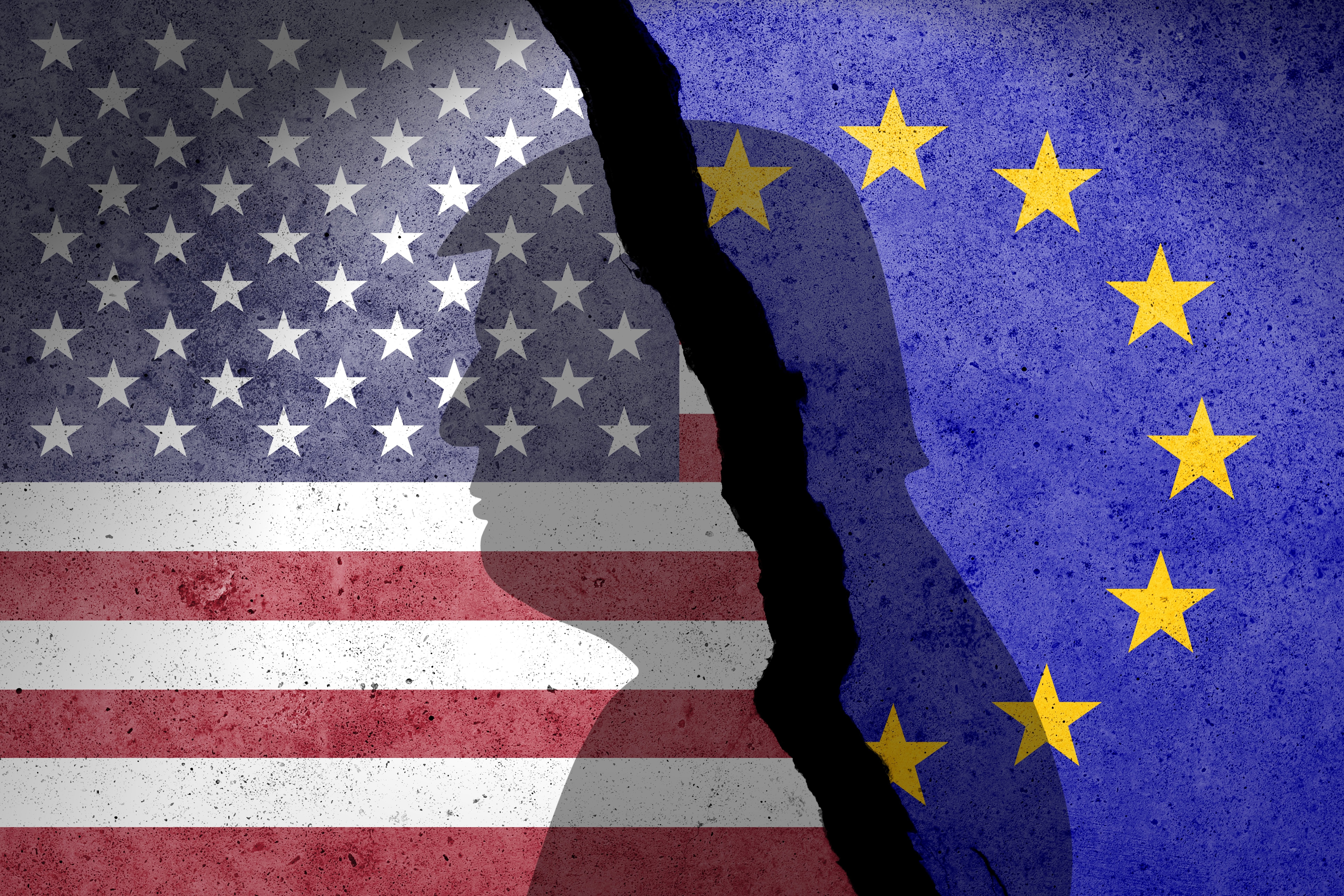
European leaders came together to issue a joint statement on the USA’s continued threats to annex Greenland, in fact it was less a threat and more of a warning. European leader almost never publicly correct Washington, even on matters of genocide or international law. However, Greenland seems to be the one area where they are standing their ground in unison, stating plainly that Greenland is not a strategic asset to be claimed, and not subject to the desires of an expansionist power. That this had to be said at all tells you how far the relationship between the NATO allies has fallen under the USA’s authoritarian leader.
This did not come out of nowhere. Throughout 2025, the U.S.–Europe relationship has been steadily deteriorating. Trump attacked his NATO allies in his widespread trade war, took many steps to ensure Russia has a stronger position in negotiations, and has repeatedly called Europe weak, as have some of his regime members. In the past year, we have seen European militaries stopping intel sharing with the USA, a terrible sign for partners in a military alliance.
The breaking point has been Washington’s growing comfort with force-first politics. The U.S. attack on Venezuela, carried out without international mandate, confirmed fears long circulating in European governments that the rules only apply until they become inconvenient. Europe spoke collectively because staying silent would mean accepting a world where power replaces law, and where Europe is expected to follow along with an expansionist USA.
Gunfire in Venezuela
Trump to be handed Nobel prize?
Yesterday, Venezuelan opposition leader María Corina Machado said she would be willing to hand her Nobel Peace Prize to Donald Trump, following the Washington Post report that Trump’s team had quietly ruled her out as a post-Maduro leader precisely because she the prize.
Much of the world expected Trump to push for Machado to be installed as the puppet leader of Venezuela following the attack and kidnapping of the president of Venezuela, but Trump’s ego was cited as the largest kink in that possibility. It seems like Machado now thinks that handing the award to Trump will lead to her being considered by the U.S. regime, who has since signalled they are happy with the current acting president Delcy Rodríguez taking charge in Venezuela, especially as she just extended an invitation for the USA to help her ‘stabilise’ the country.
Major arson attack on German infrastructure
German authorities are investigating a serious arson attack on critical infrastructure in Berlin after high-voltage power cables near a substation were deliberately set on fire, cutting electricity to tens of thousands of homes and businesses during freezing winter conditions. The attack disrupted heating, mobile networks, and essential services, and has been treated as a politically motivated act rather than vandalism. Officials say the fire was deliberately set and posed a direct risk to civilian life, particularly given the temperatures and scale of the outage.
The incident has intensified concerns in Germany over the vulnerability of civilian infrastructure amid rising political extremism. The government has warned that attacks on energy infrastructure cross a clear line, sand do not constitute an act of protest. The attack is not currently being linked to Russia, as other sabotage instances in Europe have, instead officials are centring on an activist group called Vulkangruppe(Volcano Group).
Maduro’s trial doesn’t make sense
Maduro is being tried under U.S. law for actions that did not take place in the United States, which is just the first issues that needs to be addressed about the bizarre trial of the former Venezuelan leader. The narco-terrorism and cocaine importation charges are at least theoretically possible, drugs move and corruption exists, even if the evidence tying him personally to those operations appears thin. What no longer holds is the claim that he ran the so-called Cartel de los Soles, long presented as a formal drug cartel. That narrative now appears to have been quietly dropped by the U.S. itself, removing the central justification that underpinned years of rhetoric, and the kidnapping itself.
What remains are charges that border on the nonsensical. Maduro is accused of possession of machine guns and destructive devices, and conspiracy to possess them, despite being the head of a state military. He did not carry out these acts in the U.S., he did not smuggle weapons into American territory, and the conduct described is indistinguishable from exercising command over an armed force. Whether these claims will withstand the scrutiny of a judge will be seen in March, when Maduro and his wife return to the courtroom. Under Trump, they likely will hold, but there is no logic that supports it.
Venezuelan forces fire at unauthorised drones
Gunfire was reported in Caracas last night near the presidential palace, with Venezuelan authorities claiming security forces opened fire after detecting unauthorised drones in the area. Videos circulating online showed heavy gunfire and armoured vehicles, though officials insisted the situation was contained and did not represent a broader clash. Coming days after the U.S. attack and the removal of Maduro, the incident underscores how unstable the situation remains on the ground, with nerves clearly high and the line between “security response” and escalation becoming increasingly thin.


