ICE Agent Identified in Illinois Killing of Silverio Villegas González
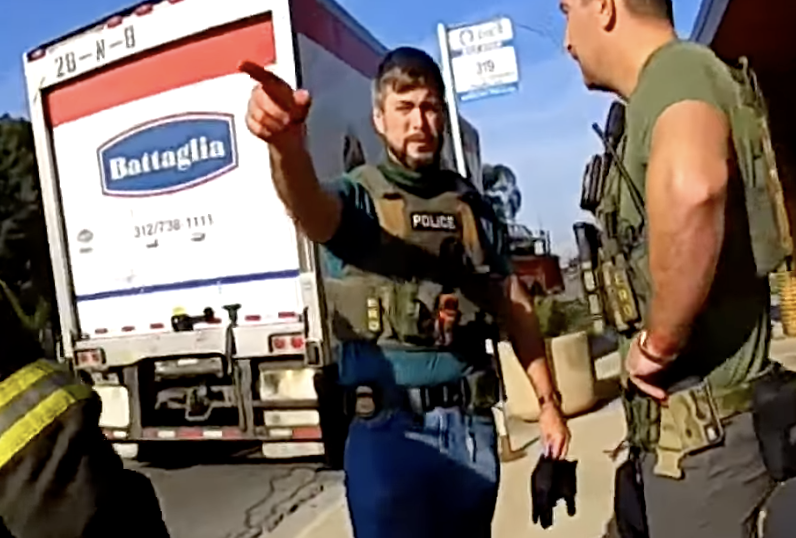
The killing of Silverio Villegas González in Franklin Park, Illinois, was presented by ICE as a justified act carried out during an enforcement operation. That narrative quickly began to unravel under the lightest scrutiny. Body worn camera footage, local reporting, and witness accounts raised serious doubts about the sequence of events and the severity of the threat claimed by federal authorities.
What remained absent from the official story was any sense of accountability. No agent was named, the shooter was not identified, and absolutely no punishment was delivered in response to the killing. As usual, responsibility is not something that ICE agents seem expected to hold by their bosses, but we certainly will hold them responsible in our record keeping.
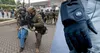
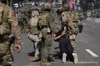
Through our ongoing work on the ICE List, we have now identified one of the agents involved in the operation that led to Silverio Villegas González’s death. Arian S. Moore was one of the ICE agents involved in the pursuit during the Franklin Park operation. We need to be clear and precise about what this means. Moore’s presence at the scene is proven, we are not asserting that he fired the fatal shot, and without further video evidence coming out, it is unlikely we can come to that determination. ICE has refused to disclose the identities of the agents, which one fired the shot, or indeed, what punishment they may end up facing, if they are to be punished at all.
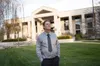
When identifying Arian Moore, our process followed a clear and verifiable chain. We received an anonymous tip from a member of the public, which led us to a federal agent named Arian Moore, a military veteran who completed his service in 2015. We then confirmed his identity through social media, locating accounts belonging to Moore himself as well as close family members. From there, our facial recognition team conducted direct comparisons between the individual visible at the scene of the killing and photographs of Moore sourced from social media.
These comparisons were run repeatedly and consistently returned the same result. We verified the match across multiple frames of the video, covering every visible angle from which the individual could be observed. At no point did the results diverge.
The outcome is straightforward. Two individuals share the same face, the same profession, the same location, and the same full name, including middle name. Taken together, the probability of a mistaken identification becomes vanishingly small. Our facial recognition match, on facial features alone, yields an estimated one-in-150,000 false match rate. That figure does not include the addition of independent identifiers: the same full name including middle name, the same line of work, and the same geographic and operational context. Even under conservative assumptions, combining these factors pushes the chance of a wrong identification into the realm of statistical outliers rather than a realistic alternative explanation.
This identification matters because the Franklin Park killing is not an isolated event, not the first killing, and certainly will not be the last. Immigration enforcement violence is routine in 2025, but unfortunately is presented as a series of disconnected incidents: a shooting here, a raid there, a video that circulates briefly before disappearing, a story that breaks into the headlines. That framing steals the context of the facts, this is a large canvas of authoritarianism, not a string of events. When incidents are examined in isolation, accountability is also stolen from us.
When connections are made, a different picture emerges. The same agents appear across multiple operations, the same vehicles are reused, in some cases, the same plates are used on different vehicles.
That is the purpose of this work, there is an authoritarian regime in the USA, and records need to be kept. We do that from outside the USA, hoping to keep it safer than it would be inside the country that is currently sliding backwards from an already flawed democracy.
By identifying agents involved in lethal or controversial operations, even when agencies refuse to do so themselves, we begin to document how the system actually functions. Agents do not appear once and vanish. They move between operations. They get reassigned, or the public are told they face punishment when, in reality, they are back to work the next day, like in the case of Victor Mojica.
There will come a time when these individuals can be held to account in the USA, when that time comes, we will hand all our data over to the prosecutors. In fact, we offer API access to our data for anyone willing to hold them accountable now.
The Franklin Park killing is not only about the tragic death of Silverio Villegas González, as devastating as that loss is. It is about how Trump’s immigration enforcement operates when it believes it will not be forced to explain itself. It is about how quickly official narratives are issued, and how slowly evidence follows, if it follows at all. It is about the bringing responsibility to those who are certain they can avoid it.
Identifying Arian S. Moore as an agent involved in the Franklin Park operation does not close this case, hopefully it helps to, but it establishes a factual baseline. It ensures that if future incidents occur, it will be possible to determine whether this same individual reappears, and whether he is involved in further horrific acts.
ICE has chosen not to identify the shooter, so we had to. That is not a good thing, it is a dark sign for any democracy.
The ICE List is a monster project, a project we will have to uphold for at least 3 more years, and costing us a lot of time and a little bit of money. If you’re in a position to be able to make a donation to lighten the burden of that, we would be greatly appreciative. Thank you all for your continued help and support.


I am immensely proud of you everyday. Thank you for all you do ❤️