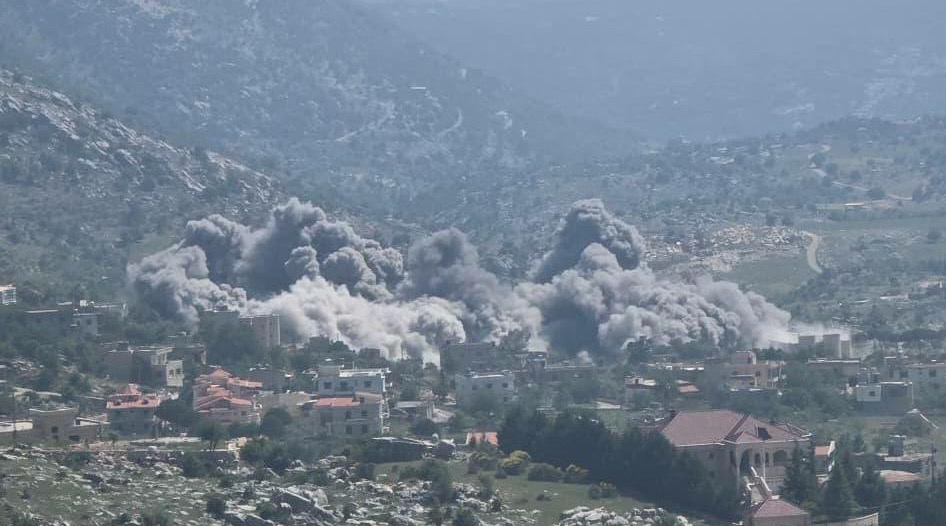
Lebanese Parliament Speaker Nabih Berri, who acts as Hezbollah’s political mediator, said on Friday that the group would withdraw from south of the Litani River, on one condition: that Israel withdraws from the Lebanese territory it occupies at the same time.
It is, by any measure, a straightforward offer. A parallel withdrawal, neither side gets to pocket a concession before the other moves. Berri described it as the basis for “a complete and comprehensive ceasefire without conditions.”
The offer comes in direct response to a deal agreed in Washington on Wednesday, after U.S.-brokered talks between Israeli and Lebanese government delegations. Hezbollah was not invited to the talks. The agreement that emerged required a complete cessation of Hezbollah fire and the evacuation of all its fighters from south of the Litani, while placing no equivalent obligation on Israel to halt its strikes or withdraw its forces. The first Israeli strike came within minutes of the announcement. We counted over 30 more in the following six hours.
Hezbollah leader Naim Qassem rejected it outright, calling it a roadmap to “achieve the enemy’s objectives.” That rejection is being treated in most Western coverage as if it is some reflection of reality. There is no expectation of any actor, state or non-state, to accept a deal that they were not present during the negotiations of.
The Israeli cabinet met to vote on ratification. No vote was held. Netanyahu told ministers the deal would only be brought to them for approval if Hezbollah agreed to it first, a condition he knew was not met. A cabinet that negotiated the deal, agreed its terms, and then declined to ratify it on a technicality it had engineered is not a cabinet that wants a ceasefire. English-speaking sources are not touching this story. There is practically zero coverage of the Knesset’s refusal to ratify the deal signed under their terms.
Meanwhile, the far right inside that cabinet made its position plain. National Security Minister Itamar Ben Gvir called on Netanyahu to reject the deal entirely. Minister Eli Cohen told colleagues that “a reasonable state would have destroyed them for strikes like these.” The pressure on Netanyahu is not toward peace. It is toward escalation, and he is not resisting it very hard.
Berri, for his part, called the Washington framework “booby-trapped,” and said it should have included an unconditional ceasefire across land, sea, and air. The language is pointed. A ceasefire agreement that allows the occupying military to continue striking while demanding the other side disarm and withdraw is not a ceasefire. It is a surrender document with better branding.
The question now is whether the Berri offer is treated as a serious diplomatic opening or will it be entirely dismissed?
A concrete offer is on the table. What gets done with it will tell you everything you need to know about who actually wants this occupation to end.