Debunking the US Murder Spree at Sea
The United States military killed two more people at sea on Friday.
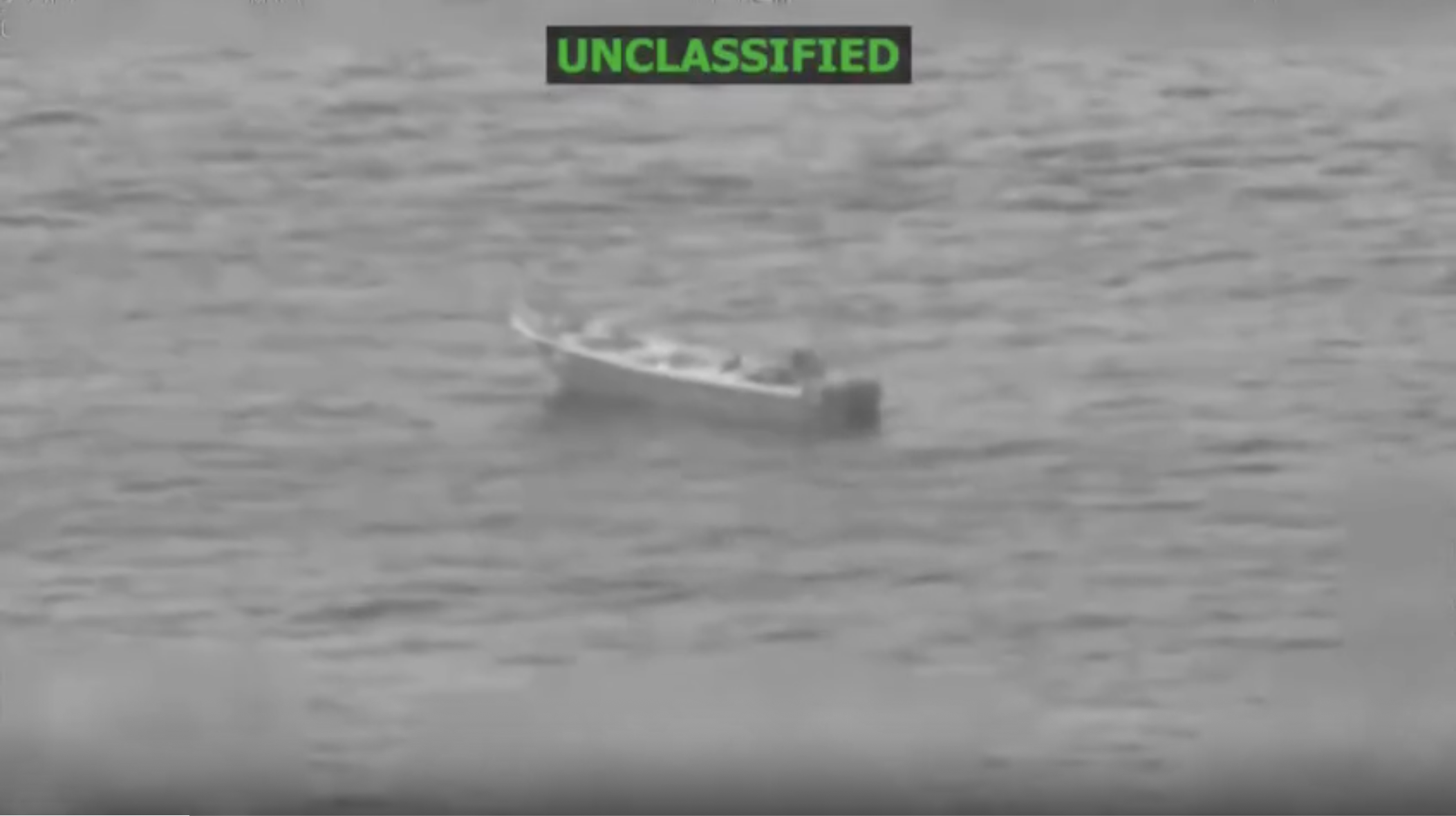
A strike announced by US Southern Command and ordered by Gen. Francis L. Donovan, hit a small boat in the eastern Pacific last night, just the latest attack on small boats as the USA continues to attack what they insist are “drug vessels”. SOUTHCOM described the 2 people they killed as “male narco-terrorists.” They have released an eleven-second video of the attack, however, they did not release their names, the evidence behind the targeting decision, or the location of the strike beyond the ocean it took place in.
The total now stands at 183 people killed in 53 strikes since 2 September. None of the dead have been publicly identified by the United States, none of the boats has been linked, with public evidence, to any drug shipment. The regime has not produced a single document, witness, intelligence summary, or chain of custody to support its claims about any of the 53 vessels it has destroyed. In fact, we have more evidence of the fishing boats caught up in these attacks than we have of a single drug vessel being struck.
Every time the U.S. military announces one of these strikes, it follows the same template. SOUTHCOM posts a grainy aerial clip on Twitter(currently known as X), they claim that “intelligence confirmed” the boat was on a “known narco-trafficking route”, they insist the victims belong to a “Designated Terrorist Organisation” without ever naming which one, they then announce how many people have been killed. They do not say what was on the boat beyond insinuating there were some vague drugs on board, they do not say where the boat was beyond the Caribbean or Pacific, they especially never state how the United States knew what it claimed to know.
In eight months, we have seen fifty-three strikes kill 183 people in cold blood, and somehow, the USA have released zero pieces of public evidence. The regime is killing first and offering an excuse afterwards. Evidence, in this scheme, is something owed to no one.
One major point to note, is that even if the evidence existed, the strikes would still be illegal.
US law requires either a congressional authorisation for the use of military force or an Article II self-defence basis grounded in an imminent armed attack on the United States. Drug trafficking is not an armed attack. There is no AUMF covering cartels. The “Designated Terrorist Organisation” label is an executive-branch designation issued by the State Department, it does not authorise murder through military strikes. The Senate has twice declined resolutions that would have constrained the campaign, and crucially, it has not passed one that would authorise it.
International law is also not on the side of these attacks. The Caribbean and the eastern Pacific are not war zones, drug interdiction at sea is governed by the UN Convention on the Law of the Sea and by decades of Coast Guard practice: hail, board, search, arrest. Lethal force is permitted only in immediate defence of life, no lives have been at risk in any of the 53 cases. The standard published US justification, that a vessel was “transiting a known route”, is not even probable cause. The presence of a boat in any one territory is not a legal justification for a strike on that boat.
The administration’s fallback is to claim an “armed conflict” with cartels, which would import the laws of war. Cartels are not parties capable of waging armed conflict in the legal sense. Even if they were, international humanitarian law requires distinction between combatants and civilians. A man on a boat is a civilian. Outside armed conflict, the right-to-life provisions of the International Covenant on Civil and Political Rights apply in full.
Human Rights Watch, Amnesty International, and the American Civil Liberties Union have reached the same conclusion. These are extrajudicial killings.
The reason the United States is not releasing evidence is becoming clear, they continue killing innocent fishermen in these attacks. In every case where the dead have been identified, by their families, their governments, or survivors, the people on the boats have turned out to be fishermen. We have more confirmed instances of attacks on fishing boats than those on drug boats.
Alejandro Carranza, a Colombian, was killed on 15 September. His boat had suffered a mechanical failure. It was adrift, outboard motor raised, broadcasting a distress signal. Instead of help, his boat came under fire from the world’s most powerful military. His family has filed a complaint with the Inter-American Commission on Human Rights.
Chad Joseph, 26, and Rishi Samaroo, 41, were killed on 14 October. They were Trinidadian, they had been fishing off the Venezuelan coast and working on Venezuelan farms, and were on their way home. Their families have filed a wrongful-death suit against the United States in federal court in Massachusetts.
The Ecuadorian fishing boat La Fiorella was destroyed on 20 January. When the eight-man crew had finally been seen again, they revealed they had been kidnapped and tortured. The Ecuadorian Coast Guard had inspected the boat days earlier, found nothing, and cleared it to continue. The captain’s last call home, on an emergency line, reported that an American aircraft and two drones were circling, then came the attack.
The Ecuadorian fishing vessel Don Maca was destroyed on 26 March. Its crew of twenty did not die in the strike. Survivors say they were taken aboard a US vessel, hooded, beaten, and held incommunicado for eight days before being abandoned on the Salvadoran coast. They arrived with vision loss, hearing loss, bruised limbs, and perforated arms. Their lawyer has described their treatment as enforced disappearance and torture.
If the United States were killing the people it says it is killing, it would say so. It would name them. It would publish their photographs, their cartel affiliations, their routes, their cargo. It does this routinely with other targets. Cartel leaders captured or killed by US forces are announced in detail, their crimes catalogued, their identities confirmed.
In the boat strike campaign, none of that has happened. The names the United States would have to publish are the names of fishermen.
According to The Intercept, the State Department has been pressuring the Inter-American Commission on Human Rights to drop a potential investigation into the strikes. A government confident in its record does not lobby a human rights body to drop the inquiry, they would simply provide the evidence to back up their claims. It is worth being plain about how unusual this is, and it is beyond unusual.
Before September 2025, the United States had not publicly acknowledged a military airstrike in Central or South America since the 1989 invasion of Panama. For three and a half decades, drug interdiction in the Caribbean and the eastern Pacific was a Coast Guard operation. Boats were stopped, people were then arrested, evidence was collected and those accused would face trial. The system was imperfect, but it was a system.
That system has been replaced, in eight months, with bi-monthly grainy videos of small craft being incinerated by missiles. The United States government posts these videos on social media. It writes captions for them. It describes the dead, in advance of any identification, as terrorists.
In that time, no court has ruled on the strikes. No congressional vote has authorised them. No international body has been given the evidence the administration says exists. No families of the dead have been notified by the United States. No bodies have been recovered. No investigation has been opened by the country conducting the killings.
183 murders at sea is not a foreign policy, it is a killing spree.