
Can Anyone Stop Israel From Annexing Southern Lebanon?
Probably not.
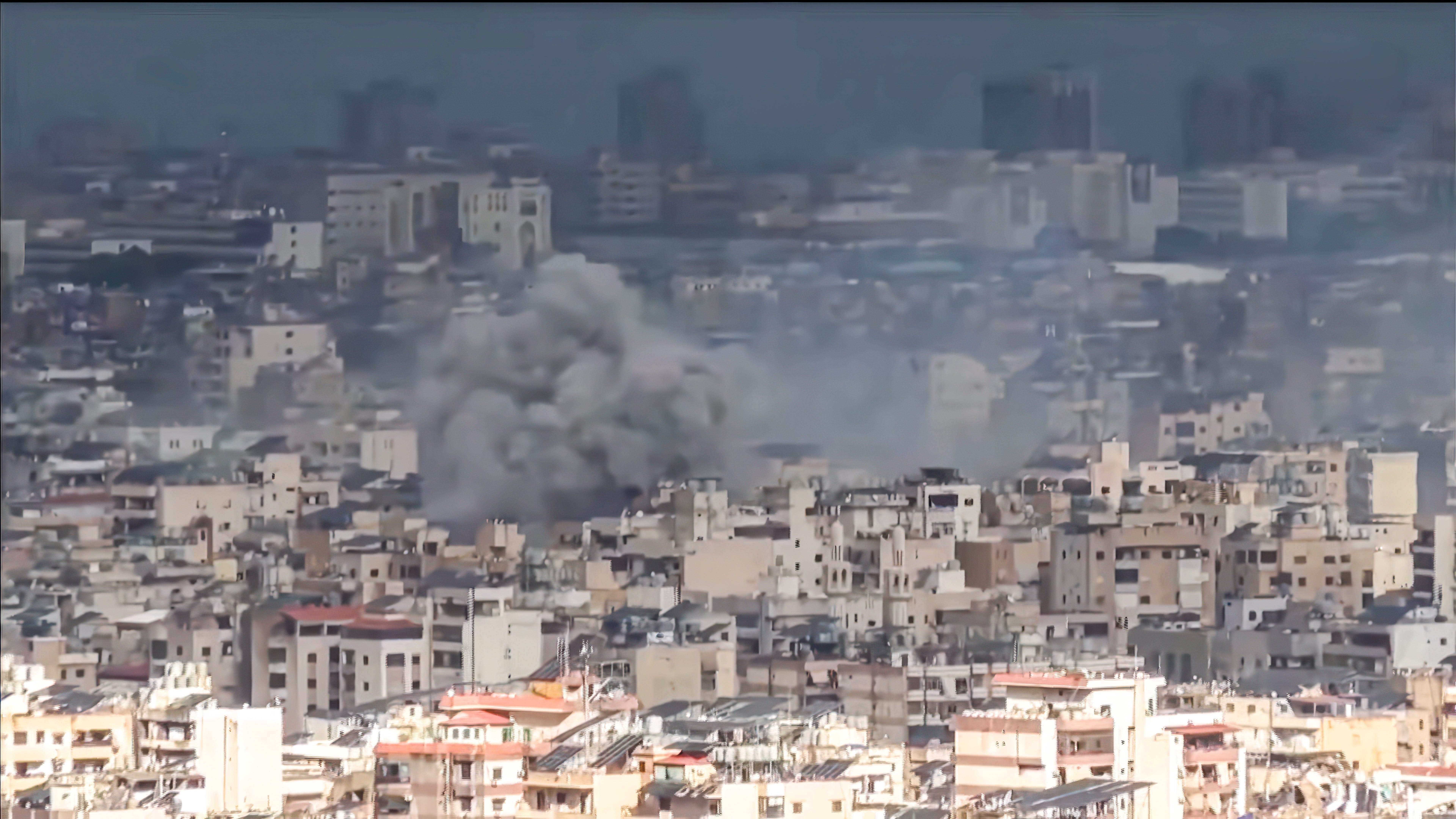
On Tuesday, March 24, Israeli Defence Minister Israel Katz announced that the Israeli military will occupy southern Lebanon up to the Litanci River. Israeli troops have been instructed to target houses and bridges, and while the president has warned that a repeat of the crimes committed in Gaza may be on the calendar for the genocidal army.
It was not the first time an Israeli official has clearly spelled out the intent to seize what amounts to nearly a tenth of Lebanon’s landmass, where there have been multiple Israeli demands to evacuate and make way for the Israeli military. The day before, Finance Minister Bezalel Smotrich had also said it on Israeli radio: “The new Israeli border must be the Litani.”
Two senior cabinet ministers expressed a desire to take foreign territory in just two days, so we are forced to assume this is the policy going forward, and likely was the policy from the start.
They’re already taking Southern Lebanon
Lebanon’s south is being emptied. Since early March, the Israeli military has issued a series of forced displacement orders covering all of southern Lebanon and the southern suburbs of Beirut. The UN confirmed on Monday that more than 1.2 million people have been displaced, roughly one in five people across the entire country. Over 130,000 of them, including 46,000 children, are sheltering in more than 600 collective sites. Most are already at full capacity.
Lebanon’s Health Ministry puts the death toll at over 1,000 since the assault intensified at the start of the month. On Monday alone, an Israeli airstrike hit a residential apartment building in Beirut, killing at least three people, including a three-year-old girl.
The infrastructure enabling return is being systematically destroyed. Israel has ordered its military to demolish all crossings over the Litani River. Bridges that would take displaced people back to their towns and villages. Fuel stations and health centres have been hit. Al Jazeera’s correspondent on the ground described what she called a strategy to depopulate the entire southern region.
Senior Israeli officials have stated explicitly that this is the Gaza model. “We are going to do what we did in Gaza,” a senior Israeli official told Axios. Defence Minister Katz used the same comparison twice in a week. In Gaza, that model produced what the International Court of Justice has been asked to rule constitutes genocide. The genocidal military has already released footage of attacks that have flattened entire villages in Lebanon, showing their Gaza model is already being used.
International Law as absent as ever
UN Security Council Resolution 1701, passed in 2006 to end the last major Israel-Lebanon war, requires Israeli withdrawal from Lebanese territory and places explicit limits on Hezbollah’s military presence south of the Litani. It is the cornerstone of whatever international legal architecture governs this border.
Israel is now tearing it up in public, and arguably, has never followed the resolution at all.
Katz’s announcement that the IDF will “control the remaining bridges and the security zone up to the Litani” and establish a “defensive buffer” is not consistent with Resolution 1701. It is the explicit repudiation of it. This is not a reading of the resolution that Israel can paper over with legal argument. The text requires withdrawal, Israel announcing permanent occupation is a direct refusal to follow the resolution.
The UN human rights chief has criticised Israel’s actions and threats in Lebanon. International law generally prohibits militaries from attacking civilian infrastructure. Multiple Security Council members have noted the violations, but we are not seeing any move to push Israel towards following the law, and if history tells us anything, we won’t see such a move before it is too late
So, who will stop this?
This is the question that dictates the future for millions of Lebanese citizens, and the honest answer requires going through every actor with theoretical leverage and assessing what they are actually doing, or what they are not doing.
The United States
The Trump administration has full situational awareness of Israeli intentions. According to reporting by Axios, US and Israeli officials confirmed the plan to seize the entire area south of the Litani River. The US response was to simply ask Israel not to bomb Beirut’s international airport, and refrain from targeting UN peacekeepers, both demands have been ignored at this point. The USA have not retracted support after Israel failed to keep to their demands, and therefore we can assume support is not dependent on those demands.
The US holds a veto on the UN Security Council, and it has used that veto consistently to block resolutions that would place binding constraints on Israeli military conduct. The USA will not stand up to prevent the annexation of Southern Lebanon, it is far more likely to enable the move.
The United Nations Security Council
The UN can’t step in, as a result of the aforementioned U.S. veto. In an ideal world, the UN would be able to simply operate on issues that a majority of members oppose, but we don’t live in an ideal world.
The UN Secretary-General’s spokesperson confirmed millions have been displaced, the UN human rights chief issued criticism of Israel’s actions and plans, and that’s about all we can expect to happen. The UN can only act with the support of others, and a silly old rule prevents that support if one of five countries declare a veto.
UNIFIL
The UN Interim Force in Lebanon has been on the ground in the south since 1978. Jean-Pierre Lacroix, the UN Under-Secretary-General for Peace Operations, has warned the Security Council since October that the safety and security of peacekeepers is “now increasingly in jeopardy,” with southern Lebanon now largely uninhabited and “increasingly uninhabitable.”
UNIFIL has no mandate to physically prevent Israeli military operations. It observes, reports, and is increasingly endangered by the very conflict it was sent to monitor. Israel fired on UNIFIL positions in the last round of fighting in 2024, and again just last week, and there’s little the peacekeepers can do to protect themselves, or the citizens in the area.
Lebanon
The Lebanese government has done everything that was asked of it. It banned Hezbollah’s military activities in March, they offered direct talks with Israel, President Joseph Aoun repeatedly condemned Israeli strikes as violations of sovereignty and international law. Prime Minister Nawaf Salam described Hezbollah’s rocket fire as “irresponsible” and ordered arrests. None of it stopped the bombs, and nothing was enough for Israel, who legally has no say in the political arrangements in Lebanon.
Lebanon is now “counting on foreign powers to put enough pressure on Israel,” according to a Lebanese official cited by Reuters. That is not a strategy, it’s simply an acknowledgment of helplessness in the face of a military and diplomatic reality that has left Lebanon with no effective protection.
Europe
Spain has strongly condemned the Israeli attacks and called for full compliance with Resolution 1701. France and other nations have called for a halt to the war, while a number of other European governments have issued statements of concern.
No European state has imposed sanctions, no European state has suspended arms transfers, of those that were supplying Israel and no European state has recalled its ambassador. With declarations already stated publicly, and intentions known to anyone following the topic, we can assume the lack of action from European nations will only continue, should the move to annex go forward.
We’re used to this
This isn’t unprecedented, Israel occupied a strip of southern Lebanon from 1982 to 2000, illegally occupying the area for 18 years before withdrawing under sustained guerrilla pressure from Hezbollah. The occupation was internationally condemned, but it did not end because of international law or diplomatic pressure, but because the military and political cost of staying became untenable.
The leadership in Israel is all too aware of this history, which is why they beg for the international community to help them remove the group from existence. The call for the Litani as Israel’s new northern border is not improvised, it’s a long term outcome to a long term plan. An editorial in the Jerusalem Post recently cited David Ben-Gurion, Israel’s first prime minister, identifying that river as a natural border for the Jewish state. These ideas have circulated in Israeli strategic culture for decades. What has changed is that the political conditions to act on them now exist.
The sad reality
Israel is operating inside a diplomatic architecture that was never designed to constrain a state with unconditional great power backing. The veto structure of the Security Council means that the one country capable of compelling Israeli compliance is also the country guaranteeing Israeli impunity, and currently, is walking in lockstep into the ongoing war crimes.
The depopulation of southern Lebanon is being carried out with deliberate speed, and much of the country’s southern region is already beginning to look like Gaza following years of bombardment. It seems the forces have been instructed to annex the territory faster than the world can react to, and it looks like they may get away with doing so.
The Litani River is 30 kilometres from the Israeli border. It cuts across nearly the full width of Lebanon. Everything south of it, villages, farmland, towns, the lives of hundreds of thousands of people, is now designated, by members of the Israeli cabinet, as Israeli territory. If no one is willing to stand up and stop it, it will be Israeli territory.


